
The Craft of Writing in Advanced English Course Overview
Facilitator: Emily Bosco (Bachelor of Arts, GradDipEd [Secondary], Master of English Studies)
Duration: 3 hours
NESA Career Stage Level: Proficient Teacher (NSW)
Australian Professional Standards: 2 and 3
Fee: $400 (GST inclusive)
Next In-person Course: TBC
Venue: TBC
Time: 10:00am-2:00pm
Next Live Online Course: Wednesday 4th November, 2026 (registrations close Tuesday 3rd November, 2026)
Time: 10:00am-2:00pm
Platform: Zoom

Session 1: Understanding the New Craft of Writing Focus Area
This session unpacks the requirements of The Craft of Writing in the new English Advanced 11–12 Syllabus. Teachers will examine the focus area content, outcomes, and expectations for imaginative, discursive, persuasive, and reflective writing, with particular attention to complex ideas, aesthetic qualities, critical and creative expression, audience, purpose, context, and compositional choice. We will explore what it means to develop students as accomplished writers and identify the key syllabus shifts that should shape programming, teaching, and learning.
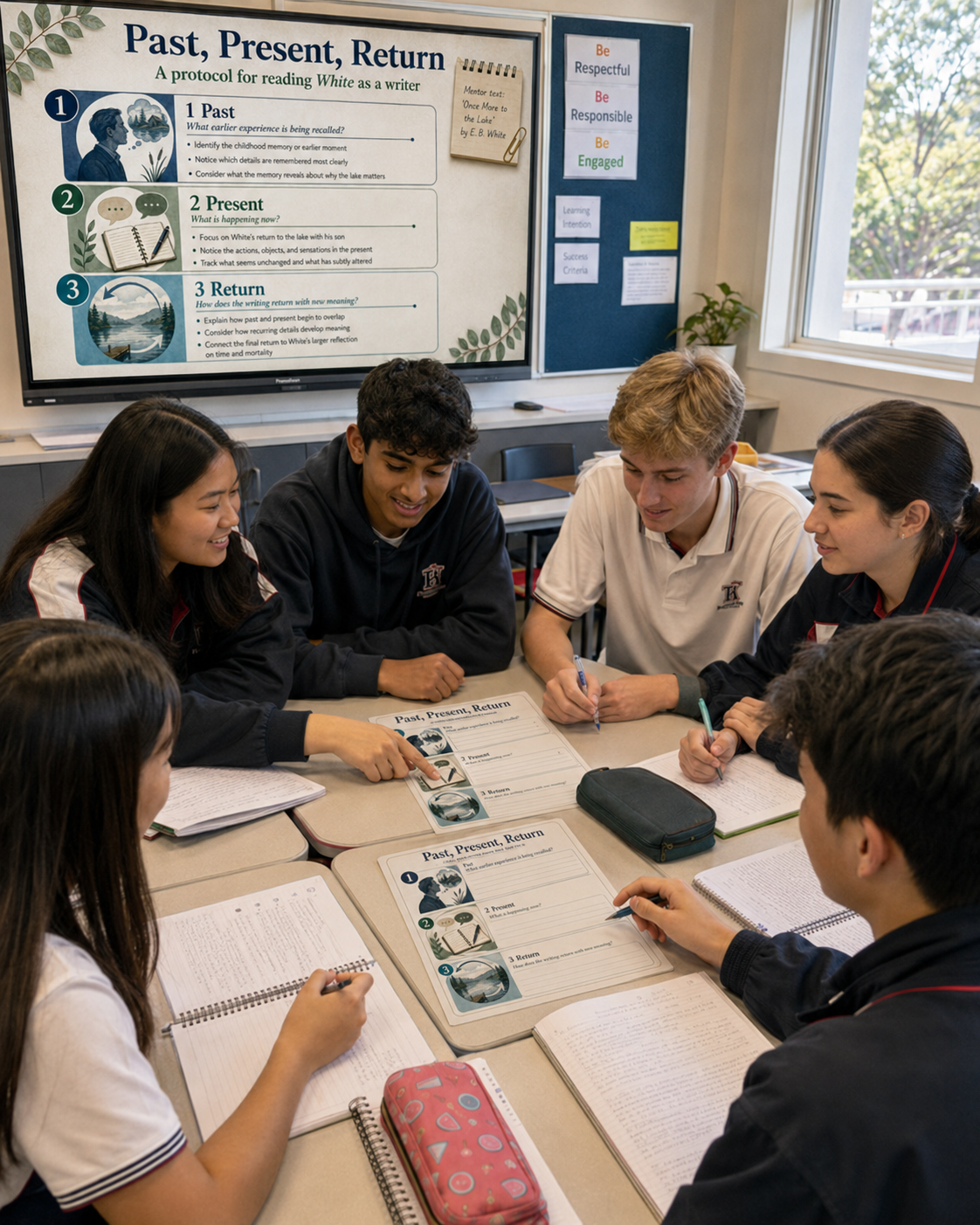
How do we help Advanced students move from analysing accomplished writing to developing a distinctive craft of their own? This session explores a practical approach to teaching through mentor texts across imaginative, discursive, persuasive, and reflective forms. Teachers will consider how close reading and evaluation of aspects of form can lead into experimentation with structure, voice, imagery, motif, allusion, rhetoric, syntax, and other literary choices. The focus is on helping students understand how choices interact to develop complex ideas and aesthetic effects, then adapt these underlying craft principles in original and purposeful ways.
Session 2: Reading Like a Writer: Mentor Texts, Aesthetic Qualities and Craft
Session 3: Developing Accomplished Writers: Experimenting, Refining, Reflecting and Assessing
The final session focuses on helping students transfer their developing knowledge of craft to increasingly independent and challenging writing situations. Teachers will explore strategies for generating and developing complex ideas, responding flexibly to unfamiliar stimuli, experimenting with form and genre, taking considered creative risks, and refining writing at whole-text, structural, sentence, and language levels. We will also examine how students can use metalanguage to evaluate their compositional choices and unpack the school-based assessment requirements and approaches to preparing students for unfamiliar HSC-style tasks. The emphasis is on developing writers who can make sophisticated choices with precision, control, flexibility, and a clear sense of purpose.

We’d love to hear from you
Whether you have a question about our professional learning, student resources or incursions, or upcoming events, our team is always happy to help.